

Sake vs Shochu vs Soju vs Chuhai: What’s the Difference Between Japan and Korea’s Most Popular Drinks?
- Welcome to Japan!

- Oct 25, 2025
- 5 min read
Updated: Mar 2
Overview
If you’re travelling through Japan, you’ll likely see sake, shochu and chuhai on restaurant menus. And if you visit a Korean restaurant, you’ll definitely come across soju as well.
While they’re sometimes grouped together, these drinks are very different in how they’re made, how they taste and how they’re enjoyed.

Alcohol has long played a role in East Asian traditions. In Japan, sake has been used in Shinto rituals for centuries and remains part of weddings, shrine ceremonies and seasonal celebrations. Shochu developed more regionally, particularly in southern Japan, and became a popular everyday drink. Chuhai emerged later as a lighter, sparkling mixed drink that reflects modern casual drinking culture. Soju, Korea’s national spirit, is deeply tied to social dining culture and group gatherings.
Understanding what separates these four makes ordering easier, and gives you more appreciation for how they fit into local life.
Sake (日本酒 / Nihonshu)

What most travellers call 'sake' is known in Japan as nihonshu. It’s brewed from rice, water, yeast and koji mold, and typically sits around 14–16% alcohol.
Although many people call it 'rice wine,' sake is brewed more like beer than wine. The fermentation process converts starch into sugar and then into alcohol, which gives it a layered, sometimes delicate flavour.
History & Cultural Significance
Sake production dates back over 1,000 years. Historically, it was closely tied to agriculture, particularly rice cultivation, which has always been central to Japanese society.
Sake has long been offered at Shinto shrines as a way of honouring the gods. Even today, you’ll see decorative sake barrels stacked at shrine entrances. It is poured during weddings, New Year celebrations and seasonal festivals. It’s not just a drink, but something that marks important moments.

At the same time, it’s also enjoyed casually with meals. In modern Japan, sake ranges from ceremonial to everyday dining.
How It’s Enjoyed
Sake can be served chilled, at room temperature or gently warmed depending on the type. Premium varieties are usually served chilled to highlight their flavour.
Traditionally, sake is poured from a small ceramic flask called a tokkuri (or sometimes a side-spouted katakuchi) into small cups known as ochoko.
In some settings, the ochoko is placed inside a wooden box called a masu, and the sake is poured until it slightly overflows.

Tips
· Don’t assume all sake is served hot. Many high-quality varieties are best chilled.
· If unsure, ask for the staff recommendation.
· Smaller cups are traditional, but sharing bottles at the table is common.
Shochu (焼酎)

Shochu is often confused with sake, but it’s completely different.
Unlike sake, shochu is distilled. That means it’s generally stronger, usually around 20–25% alcohol.
It can be made from sweet potato, barley, rice or buckwheat. The base ingredient influences the flavour significantly.
History & Cultural Background
Shochu is believed to have been introduced to Japan through trade routes centuries ago, possibly influenced by Southeast Asian distillation techniques.
It became particularly popular in Kyushu, where sweet potatoes were widely grown. Over time, shochu developed a strong regional identity and is still closely associated with southern Japan.
While sake carries ceremonial weight, shochu is more informal. It’s often considered an everyday drink, especially in izakayas. For many locals, it’s the reliable choice for relaxed evenings with friends.
How It’s Enjoyed
Shochu is commonly served on the rocks, mixed with cold water, mixed with hot water in winter, or with soda. Dilution softens the alcohol and brings out different flavour notes.

Tips
· Sweet potato shochu tends to have a richer, earthier flavour.
· If you find it strong, ask for it mixed with soda.
· Shochu is usually sipped slowly rather than shot.
Chuhai (チューハイ)
Japan’s casual mixed drink culture.
If you spend time in Japan, especially in izakayas or convenience stores, you’ll quickly come across chuhai.
The word “chuhai” comes from shochu highball. Originally, it referred to shochu mixed with carbonated water and citrus juice. Today, it generally means any sparkling alcoholic drink made with shochu or a neutral spirit mixed with fruit flavours.
Chuhai is usually around 3–9% alcohol, though stronger versions exist. Compared to sake and shochu, it’s lighter, more refreshing and often slightly sweet.
Cultural Background
Chuhai rose to popularity in post-war Japan as an affordable, easygoing drink that suited everyday life rather than ritual or regional tradition. Today, it’s found everywhere from izakayas and standing bars to festivals, baseball games and convenience stores, appreciated for being approachable, refreshing and unmistakably modern Japan.
How It’s Enjoyed
Chuhai is typically served in a tall glass filled with ice, mixed with soda and flavoured with lemon, grapefruit, yuzu or seasonal fruits.
Canned versions are extremely popular and are often enjoyed at home, during hanami (cherry blossom viewing), or before a night out.

Tips
· Lemon chuhai is the classic starting point.
· If you prefer something less sweet, ask for a “dry” version.
· Strong Zero is famous for its high alcohol content, so check the percentage before ordering.
Soju (소주)
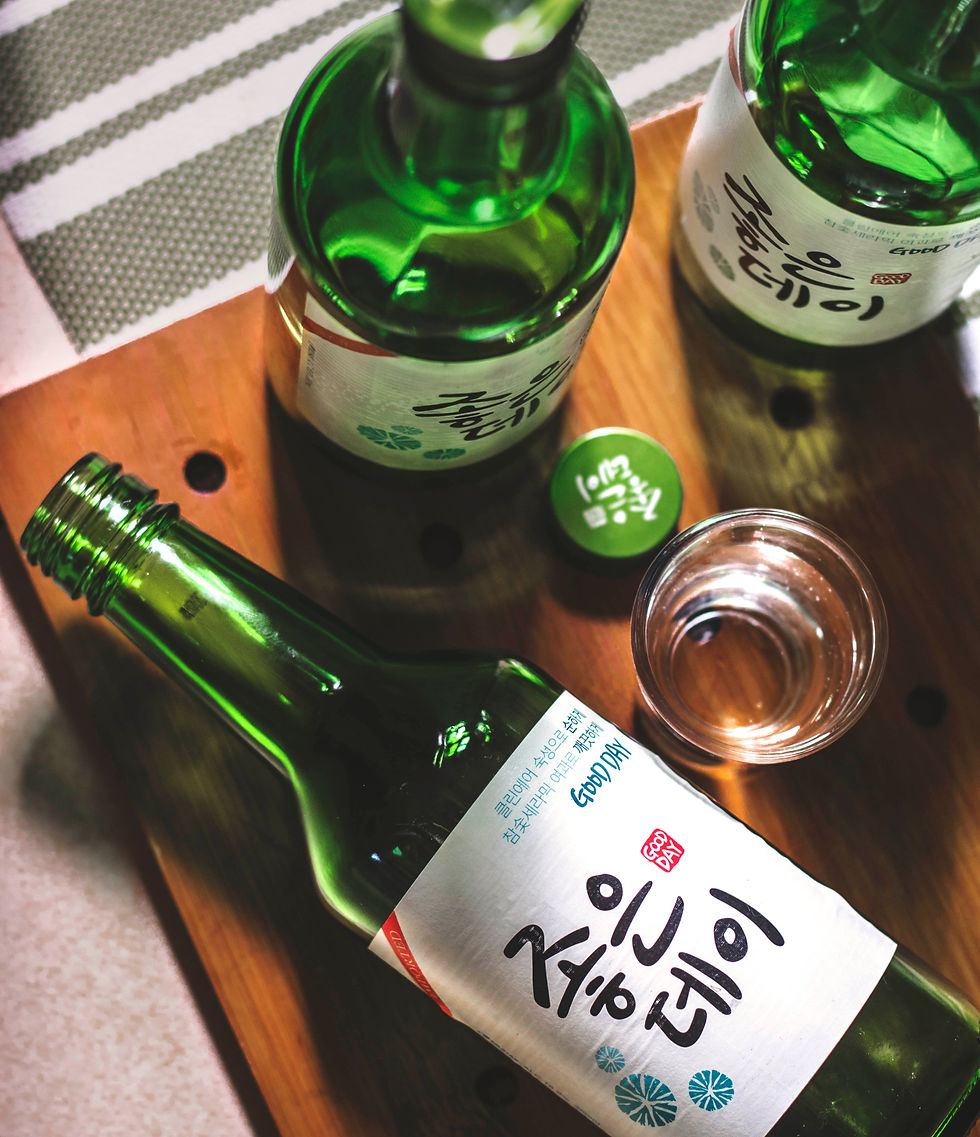
Soju is Korean rather than Japanese, but you’ll see it widely available across Japan, particularly in Korean restaurants.
Like shochu, it’s distilled. Modern commercial soju is usually between 12–20% alcohol and tends to taste smoother and slightly sweeter than shochu.
Cultural Significance
Soju plays a central role in Korean social culture. It’s commonly shared at dinners, work gatherings and celebrations. There are even etiquette rules around pouring and receiving drinks, especially between different age groups.
Historically, traditional soju was stronger and closer to shochu. Over time, modern versions became lighter and more approachable, which contributed to its widespread popularity.
While not traditionally Japanese, soju has become part of the broader dining culture in Tokyo and other major cities due to the strong presence of Korean cuisine.

How It’s Enjoyed
Soju is usually served chilled in small glasses and shared among the group.
Tips
· It’s smoother and often sweeter than shochu.
· It’s meant to be shared, not ordered individually.
· If you’re at a Korean BBQ restaurant, soju is the natural pairing.
Final Thoughts
Sake, shochu, soju and chuhai may sit next to each other on menus, but they represent very different traditions and drinking cultures.
Sake carries centuries of ritual and seasonal meaning. Shochu reflects regional identity and everyday Japanese life. Chuhai represents modern, relaxed drinking culture, easy to order, easy to enjoy and found everywhere from izakayas to convenience stores. Soju centres around Korean social dining and shared moments.
If you’re curious about history and tradition, start with sake. If you want something stronger and more regional, try shochu. If you’re at a Korean restaurant, soju completes the experience. And if you’re looking for something refreshing and distinctly modern Japan, order a chuhai and see why it’s so widely loved.
Let us know if the comments which is your fav!


Comments