

Hatsune 30k Cup: Beauty, Brutality, and Bottlenecks

Updated: Apr 20
A Race with History and Simplicity
Over the weekend I lined up for the 18th edition of the Hatsune 30k Cup, one of Japan’s more iconic and quietly respected trail races. On paper, it’s a relatively simple event, a 30 kilometre course with around 2,000 metres of elevation gain, but the reality of it feels very different once you’re out there in the mountains.
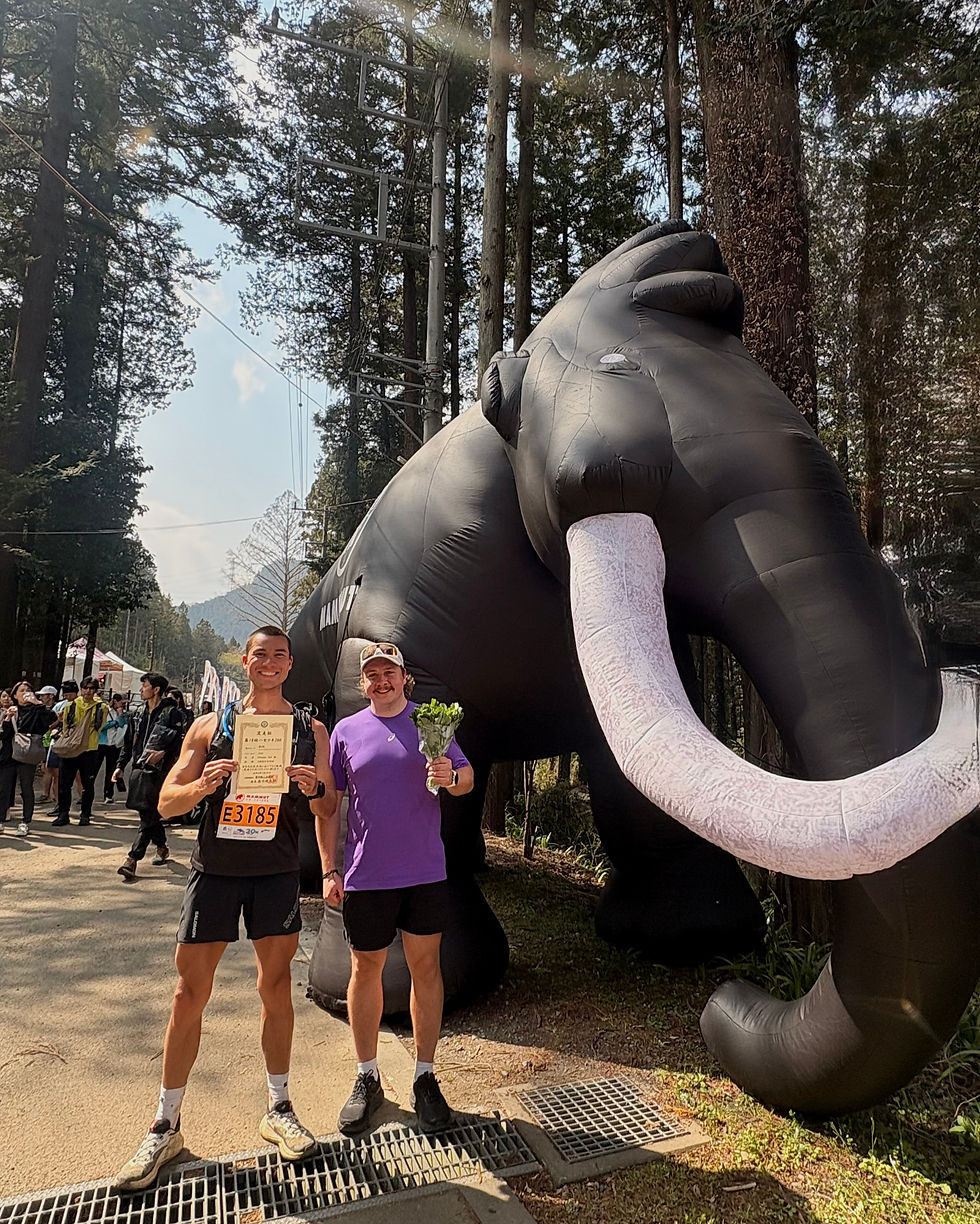
The race has a bit of history behind it, especially when you consider its 70k counterpart, which is now in its 30th year. That alone gives you a sense of how established this event is within the Japanese trail running scene.
What really makes Hatsune stand out, though, is what it chooses not to include. There are no aid stations across the entire 30 kilometre course, which means you’re entirely responsible for your own nutrition and hydration. On top of that, the mandatory equipment list is minimal compared to most trail races. It’s essentially just a waterproof jacket, rain pants, and a GPS tracker. No extensive lists, no heavy packs unless you choose to carry one. It feels very stripped back, almost old school, and I really like that about it.
Getting There and Race Morning Energy
I headed out early from Koenji on race morning, catching the Chuo Line all the way out to Musashi-Itsukaichi Station. One of the nicest parts about this race is how accessible it is. You can leave central Tokyo and, within a relatively short time (90minutes or so), find yourself right at the base of the mountains.
Sebastian and I arrived just after 7:00am, there was already a steady stream of runners and spectators making their way toward the start area near the temple. It felt like half the town had turned up, with a mix of competitors, supporters, and plenty of big-name sponsors like Adidas, Amazfit, and Mammut set up around the event area.
The weather couldn’t have been better. Clear skies, warm conditions, and temperatures expected to climb to around 20 degrees. It was going to be a hot day for a race with that much climbing, but overall, it felt like perfect conditions to be out in the mountains!
Starting at the Back (Literally)
The race itself started at 8:30am, which is a little later than what I’m used to for something this demanding. However, the bigger factor for me was the wave start system.
I was placed in wave six of six, right at the very back of the field. At the time of registration, I didn’t have an ITRA index, and I also didn’t have a recorded marathon time, so I was grouped with others in a similar position. With nearly 1,500 runners in the race, that essentially meant starting behind almost everyone.
I already had a sense of what that would mean. The week before, we had done some light course reconnaissance, hiking through sections of the same mountain range, and it was obvious that a lot of the trails were incredibly narrow. In many places, they were single-file tracks carved into the side of the mountain, with very limited opportunities to pass.
Fast Start… Then A Complete Standstill
When the race started, I went out relatively quickly at 3:30min/km pace. I was trying to make up as many places as possible, or stay ahead of the 6th wave crowd, early on before the trail narrowed. The first couple of kilometres were quick, and I managed to move through quite a few runners and even catch up to the wave ahead.
Then the first bottleneck hit.
About three kilometres in, the race came to a complete stop. In front of me was a long line of runners, easily stretching a couple of hundred metres, all waiting to enter a narrow section of trail. There was no way around it, so we all just stood there, slowly shuffling forward.
Not long after, it happened again. Around the four-and-a-half to five kilometre mark, we hit another bottleneck, this time even longer. We were barely moving for what felt like 20 to 25 minutes, covering only a few hundred metres in that time.
Letting Go of the Plan
Originally, I had planned to run somewhere around four hours, but that idea disappeared fairly quickly. By the time I reached the 10 kilometre mark, nearly two hours had passed.
Under normal circumstances, that would have been frustrating, especially because I sign up for races to push myself right to that edge where your mind starts telling you to slow down or stop altogether. I enjoy that feeling of confronting that voice and pushing straight through it.
But this wasn’t that kind of day.
Instead of getting frustrated, I made a conscious decision to let go of the time goal and focus on what I could control. Once I made that shift, everything became a lot more enjoyable.

Finding My Rhythm in the Field
As the race progressed, things started to open up slightly, or at least enough for me to begin moving more consistently through the field. I gradually worked my way from the back of wave six into wave five, then four, then three.
Eventually, I found myself running alongside athletes from the earlier waves, including those who had started in the front groups. The change in pace and intent was noticeable straight away, and it finally felt like I was properly racing again.
First Time Using Poles (and a Rookie Mistake)
This was my first time using hiking poles in a race, and they made a significant difference, particularly on the climbs. Given how little training I’d managed in the two weeks leading up, they were a bit of a lifesaver.
The lead-up itself had been far from ideal. Two weeks earlier, during a hike with friends, I drank what I thought was clean mountain water, only to find out later that it was likely run-off from the side of the road lol. As the doctor explained, just because water looks clean doesn’t mean it is. That mistake left me uncontrollably sick for nearly two weeks, with almost no training leading into the race. So much so the doc said my gut microbiobe had been "severely damaged". Yikes!

Nutrition and Managing the Effort
With no aid stations on course, nutrition was something I had planned carefully. I carried a mix of yokan, homemade onigiri, dried fruit, and banana and honey sandwiches, along with electrolyte and carbohydrate drinks.
Everything worked well, and I was able to stay on top of my energy throughout the race. From there, it became about managing effort, reading how my legs were feeling, and pushing when I could without completely blowing up.
Finishing Strong
By the time I reached the final few kilometres, I still had something left in the tank. Once the trail opened up toward the end, I was able to lift the pace and finish strong.
In the last kilometre, I picked things up significantly, overtaking a number of runners and running at a pace that felt surprisingly quick given the terrain and the effort that had already gone in. That feeling of emptying the tank at the end is always one of the most satisfying parts of racing.
Post-Race Recovery and the Real Reward
Crossing the finish line and seeing Sebastian there waiting was a great moment, especially considering I had told him mid-race that I might take far longer and he didn’t need to wait. He stayed anyway, which I really appreciated.
After finishing, I headed straight to the river to cool off, which was one of the best post-race recoveries I’ve had. From there, I had a simple but very satisfying recovery meal of a baked sweet potato, a protein shake, an apple, and a can of sweet red bean paste, which is honestly one of the most underrated post-race treats going around. Absolutely delicious and exactly what the body was craving after a long day out there.
On the walk back down toward the train station, we did briefly consider stopping at a bakery we had discovered the week before while doing course reconnaissance. When we came out to hike the area with friends, we stumbled across what I can confidently say was the best sugar doughnut I’ve ever had in my life. And I don’t say that lightly. I’ve had a lot of doughnuts, especially the simple sugar-coated kind, and this one from a bakery called Natty Willio in Itsukaichi was on another level.
So naturally, the idea of grabbing one, or two, or even half a dozen crossed our minds as we walked past. But we stuck to the plan. We knew we had a proper dinner waiting for us back in Koenji, so we kept things simple and stayed disciplined with the sweet potato, red bean, and shake combo.
Later that afternoon, we went out for a proper celebratory dinner at one of our favourite torikatsu spots in Koenji. Crispy fried chicken, rice, fresh cabbage, and a rich, smoky miso soup. Exactly what you want after a long day in the mountains.
There was also a bit of a “pro move” involved, which you’ll see in the video at the end of the post!
Final Thoughts and What’s Next
Overall, it was a really good day. The race itself could probably be improved from a logistical standpoint, particularly with the bottlenecks, but I also know that my experience was heavily influenced by starting position.
Once I have a proper ITRA index and can start closer to the front, I think it will be a completely different race.
For now, I’m taking the positives. It was a beautiful course, a unique format, and a solid effort given the circumstances.

Next up is Hiroshima 50K in two weeks, which will be my first trail ultra. The body feels sharp, and I’m excited to build into it properly.
If you’re interested in this side of what I’m doing, I’m documenting my full racing and training journey as I build in this space! You can follow along on Instagram, or check out my website. If you have any questions around fitness, racing, or performance, or you’re keen to train or collaborate, feel free to reach out!


Hey Alex,
It’s maze from Namban.
Congratulations for your finish strong!!!
I did the race 2 years ago and it was great. I would love to do it again someday.
Regarding your ITRA Performance, you can find your point here since you finished Xtrail Kenting which is listed in ITRA website.
https://itra.run/RunnerSpace/schubach.alex.6900188
And I also read that race report too. Agree with you that Trail running is the Mental battle (is the Mental game for me lol).
I’m also working in tourist industry too. Feel free to contact me if there is anything I can assist you.
See you on the trails!
maze
Ps/ I’ll have an easy trail run with Tokyo Trail Running tomorrow. Feel free to join if…
Sounds like a great experience! I just did a trail race this week, also 30k, near to OMÉ west of Tokyo. So many great trails to run around that area. Good luck on Hiroshima!
Nice race report, I'll be there in Hiroshima in a week too!